info@glycozone.in  |  ☎ +91 XXXXX XXXXX USP-Grade Ozonated Glycerine — Serving Healthcare Professionals & Integrative Clinics Worldwide
Since 1880s — 140+ Years of Healing Science

Ozonated Glycerine for Advanced Therapeutic Care

GlycoZone delivers premium USP-grade ozonated glycerine — a scientifically proven slow-release ozone delivery system with 140 years of therapeutic heritage. From wound healing to integrative cancer support.

140+
Years of Science
90
Day Shelf Life
USP
Grade Quality
10K
Gamma per mL
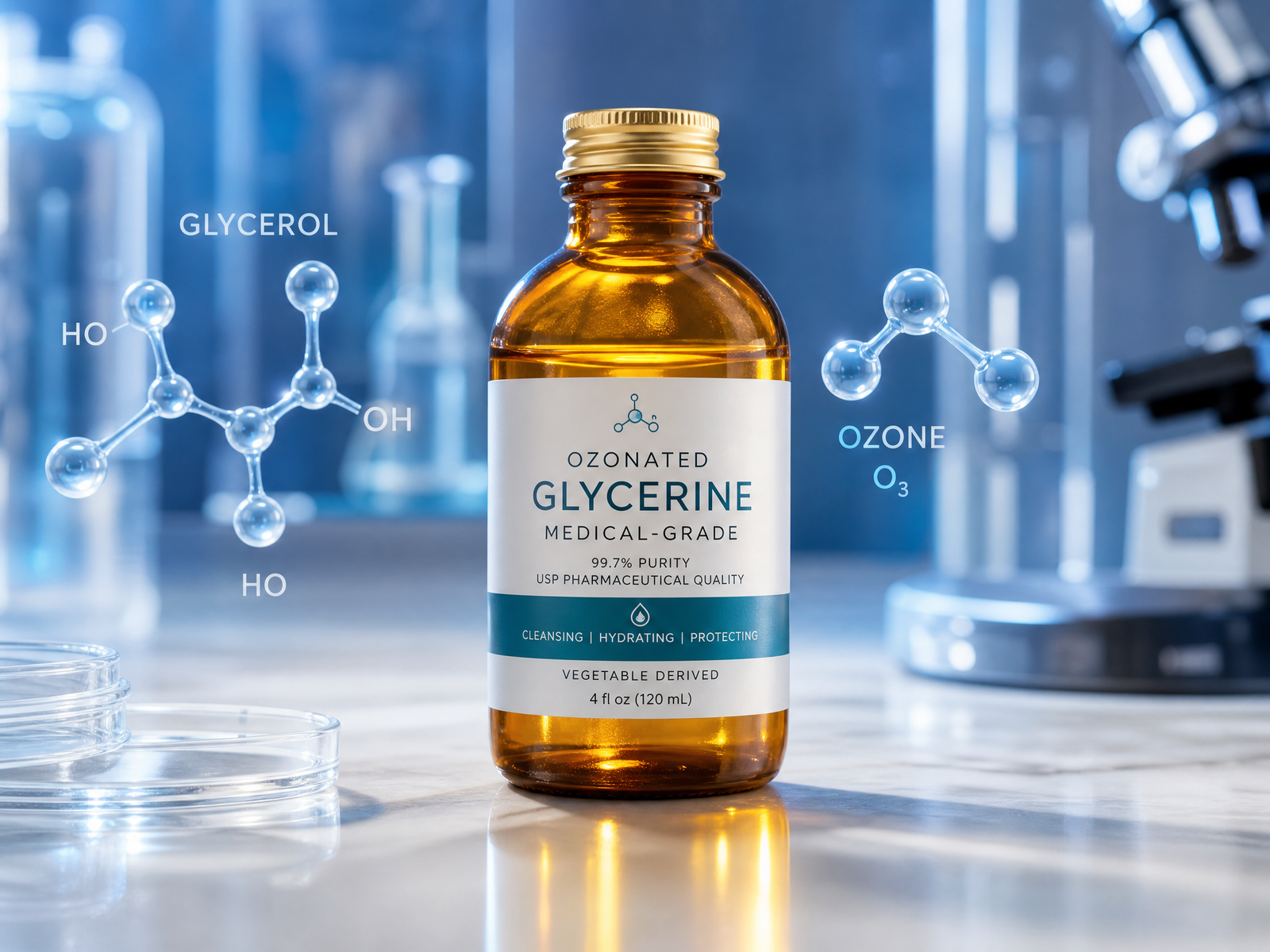
Premium medical-grade ozonated glycerine bottle by GlycoZone

Why Ozonated Glycerine Is the Future of Integrative Therapy

Ozonated glycerine (OG) is created by bubbling medical-grade ozone gas through pure USP-grade vegetable glycerine. The resulting compound is a stable, odorless, water-soluble therapeutic agent that slowly releases ozone-derived byproducts over weeks — unlike ozone water which lasts only minutes.

What makes ozonated glycerine unique is its dual advantage: glycerine penetrates skin barriers and cell membranes effortlessly, while the bound ozone metabolites deliver antimicrobial, anti-inflammatory, and regenerative effects deep within tissues. This makes OG one of the most versatile therapeutic compounds available today.

🌱

Water-Soluble Penetration

Crosses skin barriers and cell membranes better than oil-based carriers

Slow-Release System

90-day half-life at room temp; sustained release over 2–4 weeks

🛡

Broad-Spectrum Action

Antimicrobial against bacteria, viruses, fungi, and biofilms

🌟

Odorless & Gentle

No odor, non-staining, non-irritating; suitable for mucosal use
From Charles Marchand to Modern Science

The journey of Glycozone spans over a century — from a French chemist's laboratory in 1880s America to cutting-edge Japanese research and peer-reviewed clinical studies in 2026.

Charles Marchand's Original Discovery

In 1889, French chemist Charles Marchand — a graduate of the prestigious École Centrale des Arts et Manufactures de Paris — discovered that bubbling ozone gas through pure glycerine created a stable therapeutic compound. He named it "Glycozone" — a portmanteau of "Glycerine" and "Ozone."

Marchand published his groundbreaking work in the book "The Therapeutical Applications of Peroxide of Hydrogen (medicinal), Glycozone and Hydrozone" (18th Edition, 1904). He believed that the active ingredient in Glycozone was formed by the chemical reaction:

H₂O + O₃ → H₂O₂ + O₂

Marchand theorized that when ozone (O₃) dissolved in glycerine, it produced hydrogen peroxide (H₂O₂) as the active therapeutic agent — with glycerine acting as a natural stabilizer. He produced two products: Hydrozone (his medicinal H₂O₂ preparation at 15 and 30 volume strength) for rapid antiseptic action, and Glycozone (ozone + glycerine) for slow, sustained healing. As Marchand wrote:

"Glycozone is a stable compound resulting from the chemical reaction that takes place when c.p. glycerine is submitted under special conditions, to the action of fifteen times its own volume of Ozone, under normal atmospheric pressure at a temperature of 0°C." — Charles Marchand, 1904

Marchand was remarkably prescient. He explicitly warned that simply mixing H₂O₂ with glycerine does not produce Glycozone — "These two liquids when mixed do not form a stable product, but develop substances which are injurious to the patient." He understood that the ozone-glycerine reaction created something entirely unique — a concept modern science now confirms.

What Marchand Got Right — and What We Know Now

📝

Marchand's Theory (1889)

Ozone + Glycerine → H₂O₂ (the active ingredient). He believed hydrogen peroxide, stabilized by glycerine, was responsible for all therapeutic effects.

🔬

Modern Understanding (2024–2026)

Ozone + Glycerine → Ozonides + H₂O₂ + ROS (slow-release system). While H₂O₂ is indeed produced, modern research shows the slow-release ozonide mechanism and reactive oxygen species are what make OG truly unique.

Both Were Correct

Marchand correctly identified that Glycozone was NOT a simple mixture. His 90-day stability observation, his 15:1 ozone-to-glycerine ratio, and his distinction between rapid (Hydrozone) and slow-release (Glycozone) action were all remarkably accurate — and still used as the gold standard today.

1889

Charles Marchand creates "Glycozone" by passing ozone through glycerine. Believes H₂O₂ is the active ingredient.

1904

Marchand publishes 18th edition of his book with 50+ physician testimonials on clinical applications

1900s–1980s

Glycozone fades as antibiotics rise, but ozone therapy continues in European and Russian medical practice

2004

Japanese researchers prove bactericidal effects and 2-month stability; patent filed for 400+ ppm formulations

2021–2022

Studies confirm SARS-CoV-2 inactivation (≥94%) and cosmetic age-spot lightening via melanin degradation

2024–2026

Professor Okamoto's cancer research and MDPI peer-reviewed study on skin inflammation repair published

Premium Ozonated Glycerine Variants

We manufacture pharmaceutical-grade ozonated glycerine in multiple concentrations and formulations to meet the exact requirements of healthcare professionals and clinics.

High-Potency OG

Maximum ozone saturation for clinical applications. Ideal for topical wound treatment, injection therapy, and advanced integrative protocols.

Concentration: 1000+ ppm  |  Shelf Life: 90 days (room temp) / 18 months (refrigerated)
💧

Standard OG

Balanced concentration for everyday therapeutic use. Perfect for oral administration, nasal spray, nebulization, and general skin care.

Concentration: 400–800 ppm  |  Shelf Life: 90 days (room temp) / 18 months (refrigerated)
🌱

Organic USP-Grade

Made from certified organic vegetable-derived glycerine. Preferred for patients with sensitivities and for cosmetic formulations.

Purity: 99.7% USP  |  Source: Plant-derived glycerine
📦

Bulk Clinical Supply

Large-volume supply for integrative clinics, hospitals, and pharmaceutical compounding. Custom concentrations available on request.

Volumes: 250 mL – 5 Litres  |  Custom formulations available
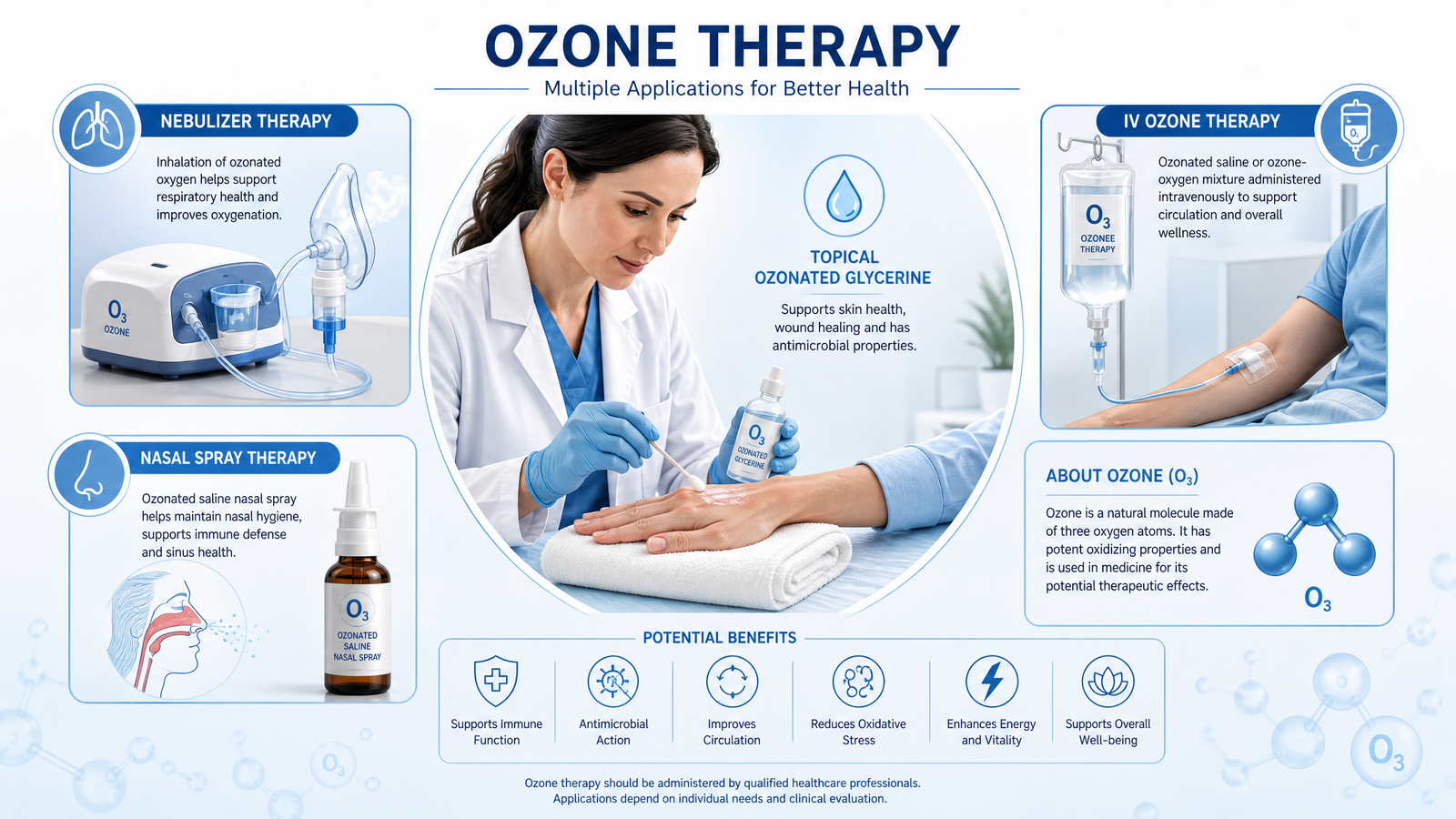
Ozone therapy applications including nebulizer, topical, IV, and nasal spray delivery methods

Ozonated Glycerine Across Every Application

From wound healing to integrative oncology, ozonated glycerine offers a versatile therapeutic platform with proven antimicrobial and regenerative properties.

Health and wellness applications of ozonated glycerine for wound healing and tissue repair

Wound Healing & Tissue Repair

Ozonated glycerine is clinically demonstrated to accelerate wound closure, enhance skin barrier proteins (claudin-1, desmocollin-1), promote collagen deposition, and reduce inflammatory cytokines (IL-1α, TNF-α). Its slow-release mechanism provides sustained therapeutic activity for chronic wounds.

  • Diabetic foot ulcers and chronic wounds
  • Burns, minor cuts, abrasions, and surgical wounds
  • Enhanced skin barrier repair and ECM protein expression
  • Reduced matrix metalloproteinase (MMP-9) activity
  • Anti-inflammatory with sustained peroxide release (2–4 weeks)
Ozonated glycerine for skin conditions, anti-aging, and cosmetic applications

Skin Conditions & Cosmetic Therapy

Clinical studies confirm that ozonated glycerine (800 ppm) significantly improves aging spots through melanin degradation over 8 weeks. It also treats inflammatory skin conditions by reducing MMP activity and promoting epidermal cohesion.

  • Age spots and hyperpigmentation (melanin bleaching)
  • Eczema, psoriasis, and dermatitis
  • Acne and infected follicles
  • Collagen and hyaluronic acid promotion
  • Anti-aging and skin rejuvenation
  • Scar reduction and skin barrier strengthening
Oral and respiratory applications of ozonated glycerine including dental and sinus therapy

Oral Health & Respiratory Support

Ozonated glycerine's antimicrobial properties make it effective for oral cavity and respiratory tract applications. Its water-soluble nature allows easy formulation as mouthwash, nasal spray, or nebulized solution.

  • Dental infections, gingivitis, and periodontal disease
  • Mouthwash for oral antimicrobial treatment
  • Nasal spray for sinusitis and chronic congestion
  • Nebulized therapy for lung infections and biofilms
  • SARS-CoV-2 inactivation (≥94.38% in 20 seconds)
  • Upper and lower respiratory infections
Systemic and integrative health applications of ozonated glycerine

Systemic & Integrative Health

When administered orally or via clinical protocols, ozonated glycerine provides broader systemic support for immune modulation, neuroinflammation, and chronic disease management.

  • Long COVID brain fog and neuroinflammation
  • Autoimmune conditions (arthritis, joint inflammation)
  • Lyme disease and chronic infections
  • Mold illness and mycotoxin support
  • Anal fissures and hemorrhoids (rectal application)
  • Gastric ulcers and gastrointestinal healing

Ozonated Glycerine in Cancer Support

Professor Yoshiharu Okamoto of Tottori University, Japan, has conducted pioneering research on ozonated glycerine's potential in cancer treatment. His yet-to-be-published work, cited in 2024, suggests that OG's 90-day half-life allows sustained release of ozone metabolites that may selectively target cancer cells while sparing healthy tissues.

"Ozone SELECTIVELY INHIBITS GROWTH of cancer cells. Studies done with breast, lung, and uterine cancer cells show that 'Normal Cells' are not affected by ozone." — Dr. Laura Enfield, Integrative Medicine

The proposed mechanism connects to Marchand's original insight. He believed hydrogen peroxide (H₂O₂) was the active agent in Glycozone. Modern research confirms that cancer cells metabolizing glucose absorb OG molecules during glycolysis. Once inside, OG slowly releases reactive oxygen species (ROS) and peroxides over its extended 90-day release cycle. Cancer cells, with their disrupted antioxidant defense systems, are more susceptible to these oxidative effects — echoing Marchand's theory that the oxidative power of his compound was its key therapeutic mechanism.

STEP 1

Selective Uptake

Cancer cells absorb ozonated glycerine molecules, mistaking them for glucose metabolites during glycolysis.

STEP 2

ROS Release

Inside the cell, OG releases reactive oxygen species and peroxides over its slow-release cycle.

STEP 3

Oxidative Stress

Cancer cells have disrupted antioxidant defense systems, making them more vulnerable to oxidative damage.

STEP 4

Normal Cells Safe

Healthy cells with intact antioxidant systems are not affected, providing selective cytotoxicity.

Important Medical Disclaimer: Ozonated glycerine's use in cancer treatment is experimental and not FDA-approved. It should only be administered under qualified medical supervision as part of an integrative treatment plan. GlycoZone products are intended for healthcare professional use.
Health and wellness benefits of ozonated glycerine for all ages

Why Healthcare Professionals Trust GlycoZone

GlycoZone manufactures ozonated glycerine using only USP-grade, plant-derived glycerine and medical-grade ozone. Our products meet the highest standards for purity, stability, and therapeutic consistency.

99.7%
USP Purity
18 mo
Refrigerated Shelf Life
10K
Gamma Ozone / mL
0
Antibiotics / Steroids

The Therapeutic Power of Ozonated Glycerine

Ozonated glycerine combines the tissue-penetrating properties of glycerine with the oxidative power of ozone, creating a uniquely versatile therapeutic compound.

🛡

Broad-Spectrum Antimicrobial

Effective against bacteria (including MRSA), viruses (SARS-CoV-2), fungi, protozoa, and biofilms. Ozone's oxidative mechanism prevents pathogen resistance.

💘

Accelerated Wound Healing

Peer-reviewed MDPI studies confirm OG improves wound closure rates, enhances collagen deposition, and reduces inflammatory cytokine release in human skin models.

🔍

Deep Tissue Penetration

Glycerine's water-soluble nature allows it to cross skin barriers and enter cells and mitochondria more effectively than oil-based ozone carriers.

Sustained Slow Release

Unlike ozone water (40-min half-life), OG maintains therapeutic activity for 2–4 weeks, providing continuous oxidative support without repeated applications.

🌏

Anti-Inflammatory Action

Significantly reduces TNF-α and IL-1α levels in inflamed tissues, modulating immune responses and supporting tissue regeneration without pharmaceutical side effects.

🌟

Gentle & Well-Tolerated

Odorless, non-staining, non-irritating. Suitable for sensitive skin, mucosal membranes, oral cavity, nasal passages, and ocular applications when directed by a physician.

Ozonated Glycerine vs. Other Ozone Therapies

See why ozonated glycerine outperforms other ozone delivery methods for most therapeutic applications.

Feature Ozonated Glycerine (OG) Ozone Water Ozone Oil
Half-Life 90 days (room temp) / 18 months (refrigerated) 20–40 minutes 18–24 months
Water-Soluble Yes — crosses skin barriers easily Yes No — oil-based
Cell Penetration Excellent — enters cells & mitochondria Moderate Limited — stays on skin surface
Odor Odorless Mild ozone scent Can have oil odor
Routes of Use Topical, oral, nebulized, nasal, injectable, IV Oral, topical, gargle Topical only
Mucosal Safe Yes — gentle on all mucous membranes Limited use Not suitable
Staining Non-staining Non-staining Can stain fabrics
Slow-Release 2–4 weeks sustained release Immediate only Extended release
Broad-Spectrum Bacteria, viruses, fungi, biofilms Bacteria, viruses Bacteria, fungi

Ready to Explore Ozonated Glycerine?

Join healthcare professionals and integrative clinics worldwide who trust GlycoZone for their ozonated glycerine supply. Get a custom quote within 24 hours.

Get Your Free Quote Today →

Request a Custom Quote

Whether you need a small order for sampling or bulk industrial supply, our team will respond within 24 hours with pricing and specifications.

Contact Information

Our experienced team is ready to assist healthcare professionals, clinics, and distributors with product specifications, pricing, and technical support.

Email info@glycozone.in
Phone +91 XXXXX XXXXX
📍
Location Your City, State, India
🕐
Response Time Within 24 hours

Frequently Asked Questions

Everything you need to know about ozonated glycerine, its safety, applications, and therapeutic potential.

What is ozonated glycerine (OG)?
+

Ozonated glycerine is created by bubbling medical-grade ozone gas (O₃) through pure USP-grade vegetable glycerine. The ozone reacts with glycerine's hydroxyl groups to form stabilized byproducts including peroxides, aldehydes, ketones, and organic acids. These compounds are held in a water-soluble glycerine matrix that slowly releases therapeutic agents over weeks. OG has an estimated 90-day half-life at room temperature.

How does ozonated glycerine compare to ozone water or ozone oil?
+

Ozonated glycerine outperforms ozone water in stability (90 days vs. 40 minutes) and matches ozone oil's longevity while being water-soluble. Unlike ozone oil which stays on the skin surface, OG penetrates cell membranes and enters mitochondria. It is odorless, non-staining, and suitable for mucosal, oral, and nebulized applications where ozone oil cannot be used.

Is ozonated glycerine safe for use?
+

Ozonated glycerine is generally considered safe for topical and mucosal applications. Japanese studies (Wang et al., 2011) confirmed its safety for skin, eyes, and oral mucosa. It is non-toxic, free of antibiotics and steroids, and well-tolerated even on sensitive skin. However, it is not FDA-approved for any medical condition and should be used under qualified medical supervision. Always consult a healthcare professional before use.

What is the scientific basis for ozonated glycerine in cancer treatment?
+

Professor Yoshiharu Okamoto of Tottori University has conducted pioneering research suggesting OG's potential in cancer treatment. The proposed mechanism involves cancer cells absorbing OG molecules during glycolysis (mistaking them for glucose metabolites), followed by slow release of ROS and peroxides that exploit cancer cells' disrupted antioxidant defenses. Clinical studies show ozone selectively inhibits growth of breast, lung, and uterine cancer cells while normal cells remain unaffected. This research is experimental and not FDA-approved.

What are the main applications of ozonated glycerine?
+

Ozonated glycerine has diverse applications including: wound healing (diabetic ulcers, burns, surgical wounds), skin conditions (eczema, psoriasis, age spots, anti-aging), oral health (dental infections, gingivitis), respiratory support (sinusitis, lung infections, nebulized therapy), systemic health (Long COVID, Lyme disease, autoimmune conditions), and integrative oncology support. It can be used topically, orally, as a nasal spray, nebulized, or via clinical administration protocols.

What is the history of ozonated glycerine?
+

Ozonated glycerine was first created in 1889 by French chemist Charles Marchand, a graduate of the École Centrale des Arts et Manufactures de Paris. Marchand discovered that passing ozone gas through pure glycerine created a stable therapeutic compound, which he named "Glycozone." He published his work in the book "The Therapeutical Applications of Peroxide of Hydrogen (medicinal), Glycozone and Hydrozone" (1904).

Marchand believed the active ingredient was hydrogen peroxide (H₂O₂) formed by the reaction H₂O + O₃ → H₂O₂ + O₂. He also created "Hydrozone" (his medicinal H₂O₂ preparation) and warned that simply mixing H₂O₂ with glycerine does NOT produce Glycozone — the ozone-glycerine reaction creates something entirely unique. Glycozone faded with the rise of antibiotics but has experienced a major resurgence since 2004, with Japanese studies proving its bactericidal effects, SARS-CoV-2 inactivation (2021), and emerging cancer research (2024).